
Aspirations Wealth constantly monitors the investment markets and aims to keep our valued clients regularly informed and updated. We aim to help investors cut through all the media noise and hype and understand what is really driving investment markets and portfolio returns.
In this edition we cover:
The Middle East Conflict
What This Means for Portfolios
Middle East Conflict
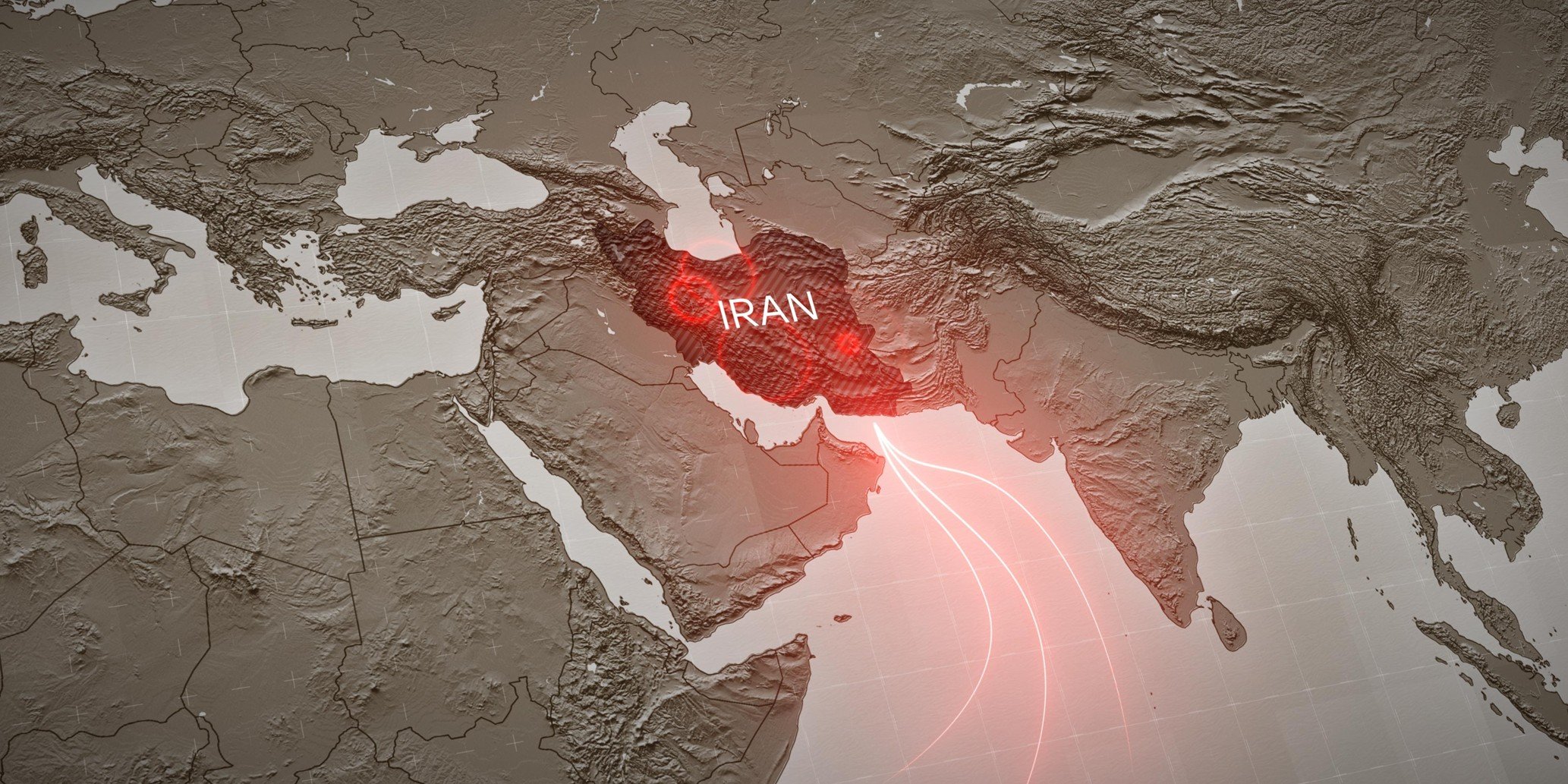
The ongoing conflict involving Iran, the US and Israel has added a new source of uncertainty to global financial markets. Events in the Middle East are always closely watched by investors, given the region’s importance to global energy supply, and the current conflict has already begun to affect investor sentiment.
At present, the Strait of Hormuz supply channel is effectively closed. This narrow shipping route is one of the world’s most important energy corridors, and disruption to traffic through the Strait has pushed oil prices sharply higher.
Periods like this can understandably create anxiety for investors. Market moves can be rapid, and headlines can shift quickly as events unfold. While the seriousness of the situation should not be understated, it is also important to keep some perspective. Financial markets have navigated many geopolitical shocks in the past, and the initial phase of volatility rarely tells the full story of how markets ultimately respond.
Why the Strait of Hormuz matters
The Strait of Hormuz is one of the world’s most important shipping corridors. A significant share of global oil exports moves through this narrow waterway each day, making it a critical route for energy supply. With shipping traffic through the Strait now effectively halted, markets have quickly priced in the risk of supply disruption. Because energy sits at the centre of the global economy, movements in oil prices tend to transmit rapidly into financial markets. Higher energy costs can ripple through the broader economy, affecting transportation, manufacturing, and consumer spending.
What this could mean for inflation and the economy
Energy prices are one of the main channels through which geopolitical events affect the global economy.
If oil prices remain elevated for a sustained period, higher fuel costs can feed through to transportation, manufacturing and food prices. This dynamic was evident following Russia’s invasion of Ukraine in 2022, when energy and agricultural supply disruptions pushed inflation higher around the world. Earlier episodes in the 1970s showed similar patterns, with prolonged oil supply disruptions contributing to higher inflation and weaker economic growth.
The risk is also broader than oil alone. The Strait of Hormuz is a critical route not just for crude exports, but also for liquefied natural gas, with about one-fifth of global LNG trade passing through the Strait, largely from Qatar. Natural gas is a key input in nitrogen fertiliser production, which means a prolonged disruption could also place upward pressure on fertiliser and, over time, food costs.
The ultimate economic impact will depend largely on how long energy prices remain elevated.
Possible paths from here
Given the uncertainty surrounding the conflict, it is helpful to think about a range of potential outcomes.
One possibility is that tensions remain elevated but contained. In this scenario, oil prices remain volatile, but energy supply ultimately continues to flow, limiting the broader economic impact.
A second scenario would involve further escalation, keeping oil prices elevated for longer. This would increase inflation pressures and weigh more heavily on global economic growth.
The most severe outcome would involve a sustained disruption to shipping through the Strait of Hormuz. This remains a lower-probability outcome, but would represent a more significant supply shock to the global energy system.
At present, markets appear to be pricing conditions somewhere between the first two scenarios, with the most extreme outcome still considered a tail risk.
What history tells us
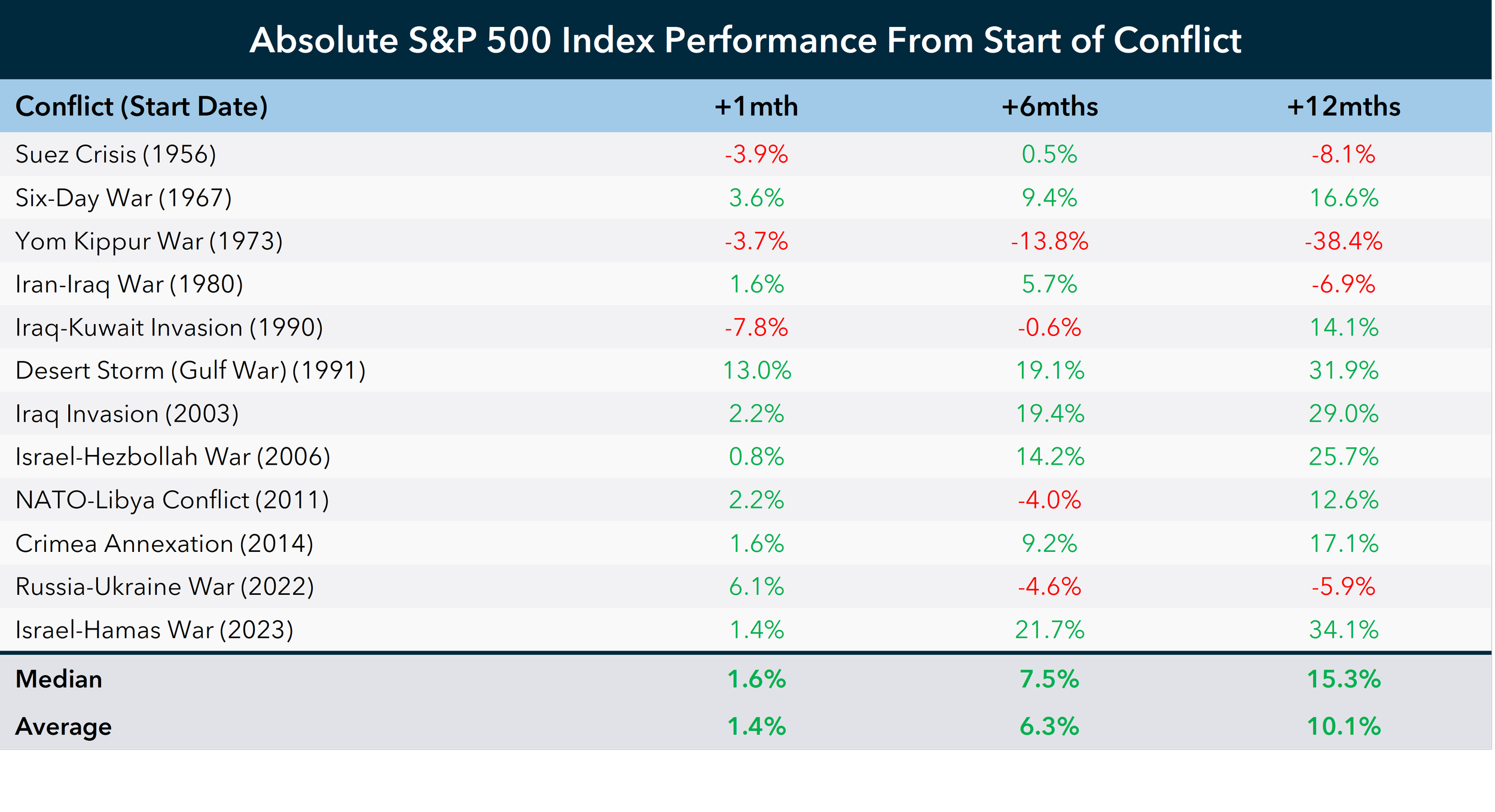
Geopolitical events often trigger sharp short-term market reactions. However, history shows that markets recover relatively quickly from geopolitical shocks.
The table below highlights how the US share market has performed following the outbreak of several major geopolitical conflicts over the past seventy years. While markets often experience volatility in the weeks immediately following these events, the majority of episodes have been followed by positive returns over the subsequent twelve months.
What this means for portfolios
Periods of uncertainty are an unavoidable part of long-term investing.
Our focus remains on the fundamentals of the assets held within portfolios and how evolving conditions may affect them. We continue to monitor developments closely, particularly the path of oil prices, inflation expectations and global economic conditions.
At this stage, remaining invested remains the most sensible course of action, as market rebounds often occur quickly once uncertainty begins to ease.
If the current disruption proves temporary, markets could recover just as quickly as they have fallen. If the situation evolves into a more prolonged supply shock and markets move lower from here, periods of volatility may also create attractive opportunities to invest in high-quality assets at more compelling valuations.
Maintaining discipline during periods of market stress has historically been far more effective than reacting to short-term headlines. Well-diversified portfolios are designed with exactly these kinds of periods in mind.
Any advice contained in this insight/update is general advice only and does not take into consideration the reader’s personal circumstances. To avoid making a decision not appropriate to you, the content should not be relied upon or act as a substitute for receiving financial advice suitable to your circumstances. When considering a financial product please consider the Product Disclosure Statement. Aspirations Wealth Group is a Corporate Authorised Representative of Aspirations Private Wealth Pty Limited. ABN 57 622 182 076 – AFSL 503889.